Article
Let No Man Judge You
Colossians 2:16, 17 This passage is presented because of Paul’s statement in regard to holy days and sabbath days. The assertion has been made that here Paul was saying that the fourth commandment is no longer binding for Christians. A closer look, however, reveals that in this text Paul makes no reference to the seventh-day Sabbath.
In verse 17 he tells us very plainly that he is talking about “sabbath days: which are a shadow of things to come; but the body is Christ.” In other words, ones which typically illustrated and pointed forward to Christ’s work of saving man from sin.
Such “shadows” were instituted only because of the problem of sin. The seventh-day weekly Sabbath does not fit that category. Having been instituted before man ever sinned (compare Genesis 2 with Genesis 3), it has no inherent connection to the salvation process. It wasn’t given as a shadow of a coming Saviour; it was established as a memorial to the Creator whose work had already taken place. Found in God’s moral law, and being completely unrelated to ceremonial shadows, the seventh-day weekly Sabbath could not be what Paul was talking about.
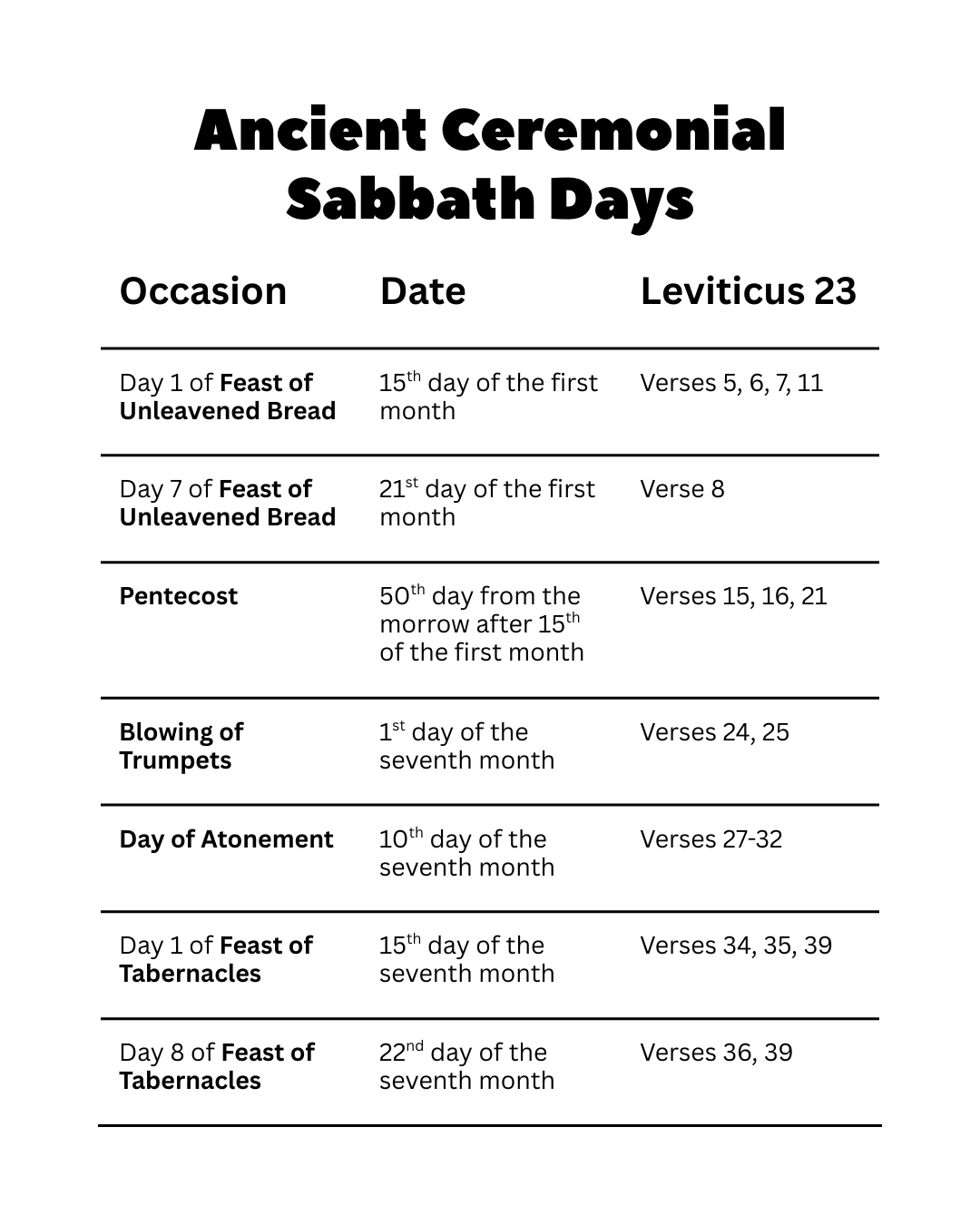
What then did he have in mind? Were there other “sabbath days” besides the weekly Sabbath of the Lord? Yes, Leviticus 23 mentions seven annual ceremonial sabbaths. Being tied to particular dates, these sabbaths occurred on different days of the week each year.
“A meat offering” and “drink offerings” (Leviticus 23:13, 18, 37) were to be presented in connection with these convocations, thus explaining the phrase “in meat, or in drink” in Colossians 2:16.
The word “sabbath” means “rest.” A sabbath is a day of rest from one’s work. Each of the annual sabbaths listed in Leviticus 23 are accompanied by the words, “Ye shall do no servile work therein” – except the Day of Atonement. This was the most solemn and most significant of all the annual sabbaths. On it they were emphatically commanded, “Ye shall do no manner of work.” Verse 31. “And whatsoever soul it be that doeth any work in that same day, that same soul will I destroy from among his people.” Verse 30.
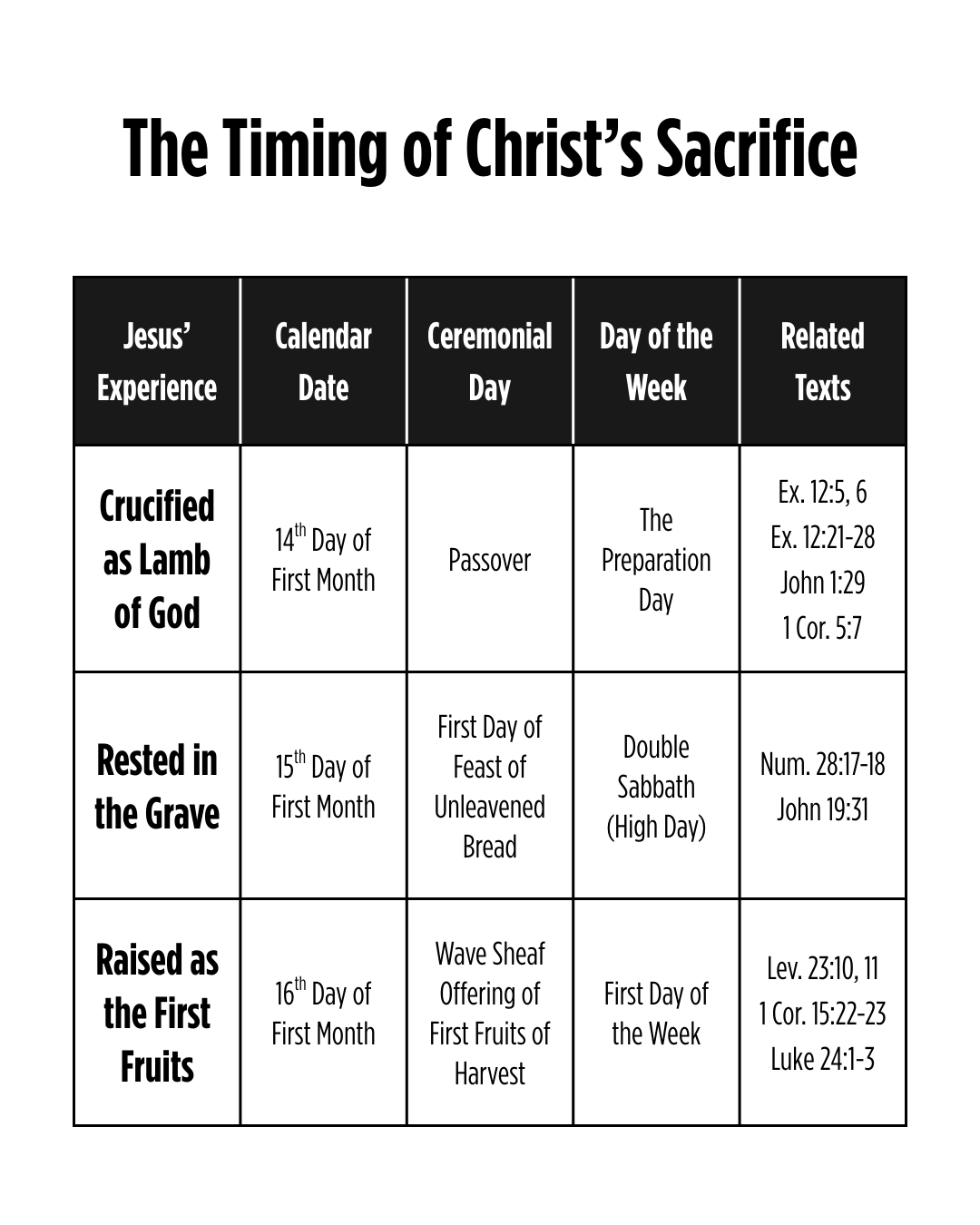
The first three ceremonial sabbaths were shadows of events connected with Christ’s ministry on earth. The last four pointed to events connected with Christ’s closing work in the sanctuary in heaven. (See Faith Points #17-19 for more information on Christ’s heavenly ministry.)
To distinguish these yearly sabbaths from the weekly Sabbath, the Lord told Moses, “These are the feasts of the Lord, which ye shall proclaim . . . beside the sabbaths of the Lord.” Leviticus 23:37, 38. That distinction was still clear in Paul’s day. When he specified “sabbath days: which are a shadow of things to come,” there was no misunderstanding.